

How Can a Corrugated Divider Improve Product Protection and Packaging Efficiency?
2026-08-25
Article Summary: A corrugated divider is more than a simple cardboard insert. When properly designed, it creates individual compartments, stabilizes products, reduces product-to-product contact, improves carton utilization, and helps minimize damage throughout handling and transportation. The right divider structure depends on product dimensions, weight, fragility, packaging configuration, shipping conditions, and production requirements. This guide explains how corrugated dividers work, how to select the right structure, what common packaging problems they solve, and how businesses can develop more reliable packaging solutions with ZHONGYI.
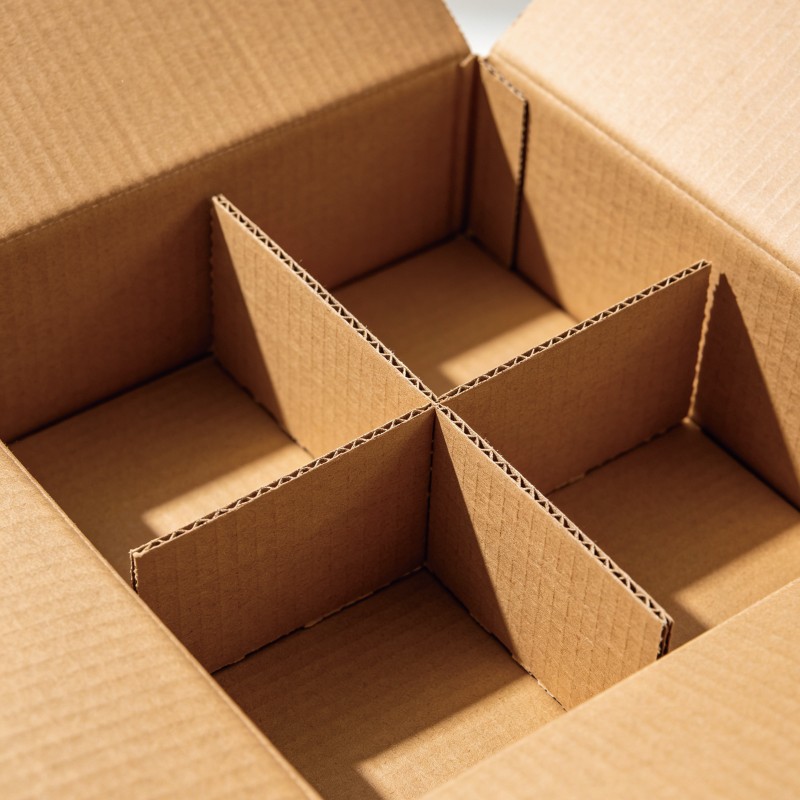
Table of Contents
- What Is a Corrugated Divider?
- How Does a Corrugated Divider Improve Product Protection?
- How Do Different Corrugated Divider Structures Work?
- How Should You Choose the Right Corrugated Material?
- Which Products Can Use Corrugated Dividers?
- How Can Corrugated Dividers Be Customized?
- What Packaging Problems Can Corrugated Dividers Solve?
- How Should You Select a Corrugated Divider?
- How Can Dividers Improve Packaging Efficiency?
- What Should Buyers Check Before Ordering?
- Why Choose ZHONGYI for Corrugated Dividers?
- Frequently Asked Questions
- Conclusion
Article Outline
- Understand the basic function of a corrugated divider.
- Identify how compartmentalized packaging reduces damage.
- Compare common divider structures and materials.
- Match divider designs with different product types.
- Understand customization options and purchasing considerations.
- Build a practical selection process for reliable packaging.
What Is a Corrugated Divider?
A corrugated divider is an internal packaging component made from corrugated paperboard and designed to separate products inside a carton, box, tray, or gift package. Instead of allowing multiple items to move freely within the same container, the divider creates individual compartments that keep products organized and physically separated.
This simple packaging component can have a significant effect on transportation performance. During loading, unloading, stacking, vibration, and repeated handling, products can move against one another. Glass bottles can collide, metal components can scratch nearby surfaces, electronic accessories can shift into empty spaces, and packaged goods can become disorganized.
A properly engineered corrugated divider creates a controlled internal structure. It can provide lateral separation, vertical support, positioning, cushioning, and improved load distribution without requiring a large amount of additional packaging material.
The design is not limited to one standard configuration. Depending on the application, dividers can use cross-slot structures, straight partitions, multi-layer reinforcement, custom-shaped sections, or other configurations developed around the dimensions and characteristics of the packaged product.
How Does a Corrugated Divider Improve Product Protection?
The primary purpose of an internal divider is to control product movement. However, its protective function involves several different mechanisms.
1. Separating Individual Products
When several products share one carton without internal separation, movement inside the package can cause direct contact. A corrugated divider creates dedicated compartments so that each product has its own defined space.
This is particularly useful for products with hard surfaces, fragile finishes, glass components, or sensitive edges.
2. Reducing Collision Damage
Transportation creates vibration and impact. Even when an outer carton remains intact, products inside can collide repeatedly. Individual cells formed by a divider reduce the distance products can travel and therefore limit direct impacts.
3. Controlling Product Orientation
Some products need to remain upright or maintain a particular orientation. A divider can provide positioning points around the product, helping prevent excessive rotation or movement during shipment.
4. Supporting Stacking Performance
For certain packaging configurations, internal partitions can contribute to structural stability by distributing loads between products and packaging components. This is valuable when cartons are stacked during storage or transportation.
5. Protecting Surface Finish
Products with painted, polished, coated, or decorative surfaces may suffer scratches when they repeatedly contact other products. A paperboard divider creates a physical barrier between surfaces.
How Do Different Corrugated Divider Structures Work?
Not every package requires the same internal configuration. Choosing the appropriate structure helps balance protection, material consumption, assembly time, and packaging cost.
| Divider Structure | Main Characteristics | Typical Applications |
|---|---|---|
| Cross-Slot Divider | Interlocking sheets create multiple individual compartments. | Bottles, glassware, cans, small packaged products |
| Straight Divider | Simple partitions separate products along one or more directions. | Mixed product sets, lightweight goods, general cartons |
| Double-Layer Divider | Additional paperboard reinforcement improves rigidity. | Layered packaging and products requiring greater support |
| Custom-Shaped Divider | Die-cut openings and contours follow product geometry. | Irregular products, specialty packaging, premium products |
| Heavy-Duty Divider | Thicker or stronger corrugated construction provides increased structural support. | Glassware, ceramics, dense hardware, heavy products |
Cross-slot dividers are especially useful when many products with similar dimensions need to be packed into the same carton. The interlocking design forms a grid that provides consistent separation across the package.
Straight dividers are generally simpler and can be useful when the packaging objective is primarily organization rather than creating many small cells.
Custom-shaped dividers are appropriate when standard rectangular compartments cannot hold the product securely. Cutouts, notches, stepped sections, and other features can be incorporated into the design.
How Should You Choose the Right Corrugated Material?
Material selection should be based on the product and transportation conditions rather than simply choosing the thickest available board.
Important factors include:
- Product weight: Heavier products generally require greater divider rigidity.
- Product fragility: Glass and ceramic products need controlled separation and stable positioning.
- Carton dimensions: Large cartons may require stronger internal structures to prevent movement and collapse.
- Stacking conditions: Long-term warehouse stacking can place greater demands on packaging structure.
- Shipping distance: International or long-distance transportation may expose packages to repeated handling and vibration.
- Humidity: Moisture can affect paperboard performance, making material and surface treatment important in demanding environments.
- Packaging appearance: Premium retail packaging may require cleaner surfaces and more refined internal components.
For lightweight products, a fine-flute corrugated material may provide sufficient separation while minimizing material usage. For heavier products, a thicker or reinforced construction can provide greater resistance to deformation.
The objective should always be an appropriate balance between protection and packaging efficiency.
Which Products Can Use Corrugated Dividers?
Corrugated dividers can be adapted to many packaging categories because the basic concept is highly configurable.
- Glass bottles: Individual cells reduce bottle-to-bottle contact.
- Wine and beverage packaging: Grid structures help keep bottles separated and organized.
- Glassware: Dividers create dedicated compartments for cups, tumblers, and similar products.
- Ceramic products: Internal separation helps reduce contact between plates, bowls, and other fragile items.
- Cosmetics: Smaller compartments can organize bottles, jars, and boxed beauty products.
- Food products: Internal partitions can organize multiple containers within one package.
- Electronics accessories: Dividers can prevent smaller components from shifting throughout the carton.
- Hardware: Individual sections can organize dense components and reduce surface contact.
- Gift sets: Custom configurations can improve both product presentation and internal stability.
- E-commerce products: Dividers help control movement when cartons experience repeated parcel handling.
How Can Corrugated Dividers Be Customized?
One of the biggest advantages of corrugated packaging components is their adaptability. A divider does not need to follow a universal size or layout.
Customization can involve:
- Overall length and width
- Divider height
- Number of compartments
- Compartment dimensions
- Slot positions
- Slot depth
- Paperboard thickness
- Flute selection
- Die-cut openings
- Product positioning notches
- Layered reinforcement
- Surface treatment
For example, a package containing twelve identical bottles may use a regular grid pattern. A package containing several products with different shapes may require a combination of straight partitions and custom-cut sections.
Good customization starts with accurate product dimensions. Buyers should provide the product's length, width, height, weight, shape, orientation, and required quantity per carton whenever possible.
What Packaging Problems Can Corrugated Dividers Solve?
Many packaging failures are caused not by insufficient outer carton strength but by uncontrolled movement inside the package.
Problem 1: Products Move During Transportation
Solution: Create compartments that restrict lateral movement and keep products in predetermined positions.
Problem 2: Products Scratch Each Other
Solution: Add physical separation between individual products.
Problem 3: Fragile Items Break
Solution: Combine appropriately sized cells with sufficient divider stiffness and, when necessary, additional cushioning materials.
Problem 4: Mixed Products Become Disorganized
Solution: Use customized partitions to establish dedicated locations for different product categories.
Problem 5: Excessive Packaging Material Increases Cost
Solution: Replace bulky loose fillers with a structural divider designed around the actual product configuration.
Problem 6: Packaging Assembly Takes Too Long
Solution: Use an appropriate pre-cut or interlocking configuration that allows workers to assemble the internal structure efficiently.
How Should You Select a Corrugated Divider?
A practical selection process should begin with the product rather than the divider itself.
- Measure the product accurately. Record length, width, height, weight, and any protruding components.
- Identify vulnerable areas. Determine which surfaces, corners, handles, caps, or delicate components require additional protection.
- Determine the carton configuration. Establish how many products will be packed together and how they will be oriented.
- Evaluate transportation conditions. Consider shipping distance, handling frequency, stacking, vibration, and warehouse conditions.
- Select the divider structure. Choose between grid, straight, layered, heavy-duty, or custom-shaped configurations.
- Select the board specification. Match flute and paperboard strength to the required structural performance.
- Test before mass production. Confirm fit, assembly, product stability, and overall package performance.
Testing is especially important for fragile or high-value products. A divider that appears suitable on paper may require dimensional adjustments after a physical packaging trial.
How Can Dividers Improve Packaging Efficiency?
A well-designed divider can improve more than product protection. It can also streamline packaging operations.
| Packaging Challenge | Potential Divider Benefit |
|---|---|
| Loose products inside cartons | Creates organized compartments |
| High product contact | Separates individual units |
| Excessive loose filler | Provides structural internal organization |
| Inconsistent product placement | Defines repeatable positions |
| Slow manual packing | Supports standardized packing procedures |
| Different products in one carton | Allows compartmentalized packaging layouts |
Standardized internal packaging can also make packing instructions easier to follow. When every compartment has a defined function, operators can quickly understand where each product belongs.
What Should Buyers Check Before Ordering?
Before placing a bulk order, buyers should evaluate both the physical product and the supplier's ability to maintain consistent production.
- Are the divider dimensions consistent with the carton?
- Do the compartments fit the products without excessive looseness?
- Is the board strength appropriate for the product weight?
- Are slots accurately positioned?
- Can the divider be assembled efficiently?
- Are cut edges clean and suitable for the application?
- Can the supplier support customized dimensions?
- Can samples be provided before mass production?
- Can production quantities meet the required delivery schedule?
- Can the supplier maintain consistent specifications across repeat orders?
These questions become particularly important when the divider is part of a high-volume packaging system. Small dimensional inconsistencies can become significant operational problems when thousands of cartons are assembled.
Why Choose ZHONGYI for Corrugated Dividers?
ZHONGYI focuses on corrugated packaging products and customized cardboard packaging components for different commercial and industrial applications. Its corrugated divider solutions can be developed according to product dimensions, carton configuration, structural requirements, and intended application.
For buyers, customization capability is important because packaging requirements are rarely identical from one product to another. A standard divider may work for a simple bottle carton, while an irregular product or premium gift set may require a completely different internal structure.
ZHONGYI supports different divider concepts, including grid-style configurations, straight partitions, reinforced structures, and custom-designed solutions. This allows the packaging structure to be developed around the product instead of forcing the product into an unsuitable standard insert.
A professional supplier should also understand the relationship between divider design and the complete packaging system. The divider, outer carton, cushioning material, product orientation, and shipping conditions should work together rather than being considered separately.
For businesses purchasing corrugated dividers in volume, this integrated approach can help reduce packaging inconsistencies and create a more repeatable packing process.
Frequently Asked Questions
What is the main purpose of a corrugated divider?
The main purpose is to separate and stabilize products inside a carton or package. It reduces unwanted movement and direct contact between products during storage and transportation.
Are corrugated dividers suitable for fragile products?
Yes. Corrugated dividers are widely applicable to fragile products such as glassware, bottles, ceramics, and other breakable goods. The divider structure should be matched to the product's dimensions, weight, and fragility.
Can a corrugated divider be customized?
Yes. Customization can include dimensions, compartment count, slot positions, divider height, board thickness, flute type, cutouts, and special product-positioning features.
Which divider structure is best for bottles?
A grid or cross-slot structure is often effective for regularly shaped bottles because it creates individual compartments. However, the appropriate design depends on bottle dimensions, weight, carton size, and shipping conditions.
Can corrugated dividers replace plastic inserts?
In many packaging applications, paperboard dividers can serve as an alternative to plastic internal components. Whether they are suitable depends on the required strength, moisture resistance, product geometry, and packaging environment.
How do I determine the correct divider size?
Start by measuring the product and identifying the required clearance around it. The divider should hold the product securely without making insertion and removal unnecessarily difficult.
Are corrugated dividers suitable for e-commerce packaging?
Yes. E-commerce packages can experience repeated handling, movement, and vibration. Properly designed dividers can help keep products organized and reduce product-to-product contact inside shipping cartons.
Can ZHONGYI provide custom corrugated dividers?
Yes. ZHONGYI provides customized corrugated divider solutions based on packaging dimensions, structural requirements, product characteristics, and order requirements.
Should I request a sample before placing a bulk order?
For customized packaging, a sample or prototype is strongly recommended. It allows the buyer to verify product fit, compartment dimensions, assembly method, and compatibility with the outer carton before mass production.
Conclusion
A corrugated divider can transform a basic carton into a more organized and protective packaging system. By separating products, controlling movement, supporting positioning, and reducing direct contact, it addresses several common causes of packaging damage.
The best divider is not necessarily the thickest or most complicated option. The right solution is the one that matches the product's dimensions, weight, fragility, carton configuration, transportation conditions, and production requirements.
For lightweight products, a simple structure may provide sufficient performance. For heavy or fragile goods, reinforced corrugated construction and carefully designed compartments may be necessary. For irregular products, custom die-cut designs can provide a more precise fit.
When selecting a packaging supplier, look beyond basic material availability. Dimensional accuracy, structural design capability, customization, sample verification, production consistency, and practical packaging experience all contribute to a dependable final solution.
With its focus on customized corrugated packaging solutions, ZHONGYI can help packaging buyers develop divider structures suited to different products and shipping requirements. If you are looking for a reliable corrugated divider solution tailored to your packaging needs, contact us to discuss your product dimensions, carton specifications, required quantity, and customization requirements.