

How Does an Anti Impact Hard Box Protect Valuable Equipment?
2026-08-24
Article Summary: An Anti Impact Hard Box is designed to protect sensitive equipment from drops, collisions, compression, vibration, and rough handling during transportation, field operation, and storage. Unlike ordinary storage containers, a properly engineered protective case combines a rigid outer structure, energy-absorbing internal protection, secure closures, and application-specific design to reduce the forces transferred to the contents. This article explains how impact-resistant hard boxes work, what construction features matter most, how to select the right solution, and how Ningbo Weishuo Molding and Plastic Products Co., Ltd. develops protective cases for demanding professional applications.
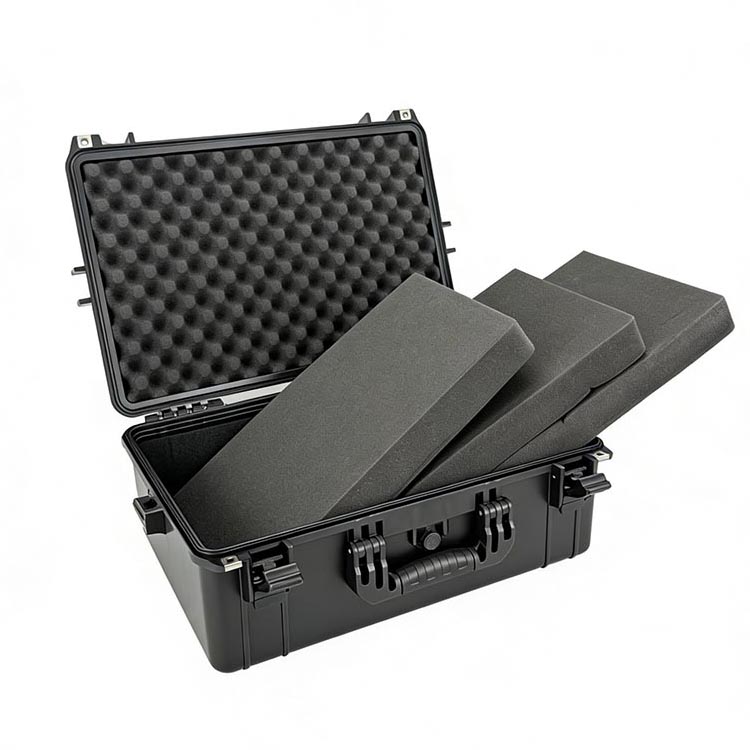
Table of Contents
- Article Outline
- Why Impact Protection Matters
- How an Anti Impact Hard Box Works
- Key Structural Features
- Why Material Selection Matters
- How Internal Cushioning Protects Equipment
- Where Anti Impact Hard Boxes Are Used
- How to Select the Right Anti Impact Hard Box
- Protective Case Feature Comparison
- Maintenance and Inspection Tips
- Why Manufacturer Capability Matters
- Frequently Asked Questions
- Conclusion
Article Outline
- Understand the risks created by impact and rough handling.
- Learn how a rigid protective shell manages external forces.
- Examine the role of engineering plastics, cushioning, closures, and structural reinforcement.
- Match protective case characteristics with real operating conditions.
- Use practical selection criteria before purchasing in bulk.
- Maintain the case so its protective performance remains dependable.
Why Does Impact Protection Matter for Valuable Equipment?
Professional equipment is often exposed to conditions that cannot be controlled. A case may be loaded into a vehicle, moved through a warehouse, carried across uneven terrain, placed on a worksite, or transported through a distribution network where repeated handling is unavoidable. During these processes, equipment can experience sudden drops, side impacts, vibration, stacking pressure, and collisions with other objects.
The problem is not simply that the outside of a case may become scratched or dented. The greater concern is the acceleration and mechanical shock transferred to the equipment inside. Precision instruments, electronic assemblies, optical devices, communication equipment, testing instruments, medical devices, and other sensitive products can contain components that are much less tolerant of sudden mechanical loads than their rugged appearance suggests.
An effective Anti Impact Hard Box therefore needs to perform more than basic containment. Its structure should help distribute external forces, while the internal protection should reduce the amount of shock reaching the equipment.
This approach can reduce several costly problems:
- Unexpected equipment damage during transportation
- Misalignment of precision components
- Cracked housings and damaged connectors
- Internal electronic or mechanical failures
- Repeated repair and replacement costs
- Operational delays caused by unavailable equipment
- Damage claims associated with logistics handling
The right protective case is therefore part of an equipment protection strategy rather than simply a container.
How Does an Anti Impact Hard Box Work?
An Anti Impact Hard Box protects its contents through a combination of structural strength and controlled energy management. When an external object strikes the case, the impact force does not need to reach the equipment directly. Instead, the protective system is designed to manage that force through the outer shell, structural geometry, cushioning materials, and equipment restraint.
The basic protection process can be understood in four stages.
- Receive the external impact: The rigid shell is the first barrier between the equipment and the surrounding environment.
- Distribute the force: The case structure spreads localized loads across a larger area.
- Absorb and dissipate energy: Internal cushioning reduces the acceleration transmitted to the protected item.
- Restrict equipment movement: A properly fitted interior prevents excessive movement that could create secondary impacts.
This is why simply making a case wall thicker does not automatically produce better protection. A high-performing case requires coordinated structural and material design.
For professional applications, designers may also consider drop orientation, expected impact locations, equipment weight, center of gravity, transport conditions, and environmental exposure. These factors influence the overall protective configuration.
What Structural Features Improve Impact Resistance?
The protective performance of a hard case depends heavily on its physical architecture. Several features should be evaluated together rather than individually.
Rigid Outer Shell
The outer shell creates the primary protective barrier. Engineering plastics can provide a useful combination of impact resistance, relatively low weight, manufacturability, and resistance to everyday wear.
A well-designed shell should maintain its overall integrity when exposed to accidental drops and routine handling. The geometry of corners, ribs, edges, hinges, and mounting points also influences how forces travel through the structure.
Reinforced Structural Areas
Not every location on a case experiences the same loading. Corners and attachment points may encounter particularly high localized forces. Reinforcement in these areas can improve structural stability without unnecessarily increasing material throughout the entire case.
Secure Closures
A protective shell is only useful if it stays closed when the case is dropped. Robust latches and correctly positioned closure points help maintain the relationship between the upper and lower sections during handling.
Protected Hinges and Hardware
Hinges and hardware should be integrated into the overall structural design. Poorly protected hardware can become a weak point during side impacts or repeated opening and closing.
Textured Exterior Surface
A textured surface can improve handling while helping conceal minor scratches caused by normal use. For equipment that frequently moves between indoor and outdoor environments, practical handling characteristics are particularly important.
Why Is Material Selection Important?
Material selection directly affects impact performance, durability, weight, temperature resistance, and manufacturing consistency. For many professional protective cases, engineering-grade polypropylene is an attractive option because it combines toughness with practical processing characteristics.
The material should be selected according to the actual service environment rather than based solely on appearance or nominal wall thickness.
| Material or Feature | Potential Advantage | Typical Consideration |
|---|---|---|
| Engineering PP | Good balance of impact resistance and weight | Grade should match the expected environment |
| Reinforced Polymer | Higher structural stiffness | May increase material and processing requirements |
| Fiberglass Reinforcement | Can improve rigidity in demanding designs | Requires appropriate formulation and molding control |
| Impact-Modified Material | Can improve resistance to sudden mechanical loading | Performance depends on formulation and application |
| High-Density Foam Interior | Reduces shock and equipment movement | Density and geometry must match the payload |
Material performance can also change with temperature. A case intended for outdoor transportation should be evaluated against the lowest and highest temperatures it is expected to encounter. According to the product information provided by Ningbo Weishuo Molding and Plastic Products Co., Ltd., its impact-resistant case solutions can use high-strength engineering PP and can be configured with reinforced material options for more demanding requirements.
How Does Internal Cushioning Protect Equipment?
The outer shell provides structural defense, but the equipment should not normally sit directly against the shell. Internal cushioning is responsible for managing movement and reducing shock transmission.
A properly engineered interior should accomplish three objectives:
- Separate the equipment from the hard shell.
- Absorb or dissipate part of the impact energy.
- Prevent excessive movement during transportation.
Foam inserts are commonly shaped around the equipment profile. This approach can provide more reliable positioning than simply placing loose padding inside a large empty case.
For precision equipment, the interior should also account for fragile areas such as displays, optical surfaces, connectors, switches, handles, and protruding components. A good insert design supports the appropriate load-bearing regions while avoiding unnecessary pressure on sensitive parts.
For applications involving repeated vibration, cushioning becomes even more important. A case may not experience one dramatic impact but instead thousands of smaller mechanical disturbances during road, rail, air, or field transportation.
Where Are Anti Impact Hard Boxes Used?
Impact-resistant protective cases are useful wherever valuable equipment must move through unpredictable environments.
- Industrial inspection: Protects testing instruments, measurement devices, and non-destructive inspection equipment.
- Broadcasting: Helps protect cameras, lenses, monitors, recording equipment, and accessories.
- Emergency response: Provides organized protection for communication equipment, detection devices, and field tools.
- Field engineering: Supports technicians who transport instruments between remote work locations.
- Medical applications: Helps protect selected portable medical and diagnostic equipment during transportation.
- Electronics: Provides physical protection for sensitive electronic assemblies and equipment.
- Military and professional operations: Supports the transportation of sensitive equipment in demanding field environments.
- Logistics and distribution: Reduces exposure to accidental drops, stacking, and rough handling.
The appropriate case configuration varies according to the equipment and operating environment. A case intended for a lightweight instrument does not necessarily require the same structural design as one carrying a heavy field device.
How Should You Select the Right Anti Impact Hard Box?
Purchasing decisions should begin with the equipment rather than the case itself. Before choosing a model, document the dimensions, weight, sensitivity, operating environment, transportation method, and expected handling conditions.
- Measure the equipment accurately. Include handles, cables, connectors, controls, and other protruding parts.
- Determine the payload weight. The case and interior support system should be appropriate for the total load.
- Identify the main impact risks. Consider drops, side collisions, top loads, vibration, and rough handling.
- Evaluate environmental exposure. Temperature, moisture, dust, outdoor use, and chemical exposure may influence material selection.
- Select an appropriate interior. Foam or other cushioning should hold the equipment securely without creating damaging pressure points.
- Check transportation requirements. A case carried by hand may have different requirements from one frequently transported through commercial logistics networks.
- Consider future expansion. If equipment configurations may change, a modular or customizable interior can provide greater long-term value.
- Discuss customization before mass production. Dimensions, materials, inserts, branding, hardware, and production quantities can influence the final solution.
Which Protective Case Features Matter Most?
| Requirement | Feature to Evaluate | Why It Matters |
|---|---|---|
| Drop protection | Impact-resistant shell and cushioning | Reduces damage from accidental falls |
| Heavy equipment | Reinforced structure and load-support design | Helps maintain case integrity under higher loads |
| Precision instruments | Custom-fit foam or molded interior | Limits movement and secondary impact |
| Outdoor operation | Durable shell and suitable sealing system | Provides additional protection against environmental exposure |
| Frequent transport | Durable hardware and ergonomic design | Supports repeated handling |
| Bulk procurement | Integrated molding and production capability | Helps maintain consistency across larger quantities |
How Can You Maintain an Anti Impact Hard Box?
Even a strong protective case should be inspected regularly. The objective is to identify wear before it affects the case's ability to protect the equipment.
- Inspect the shell for cracks, severe deformation, or structural damage.
- Check hinges and latches for looseness or abnormal movement.
- Examine foam inserts for compression, tearing, or loss of shape.
- Confirm that the equipment remains properly positioned inside the case.
- Clean dirt and debris from closure areas.
- Do not overload the case beyond its intended configuration.
- Replace damaged cushioning instead of relying on visibly deteriorated foam.
- Store the case appropriately when it is not in use.
Regular inspection is particularly important for cases used in industrial, field-service, emergency, and logistics environments where repeated impacts are part of normal operation.
Why Does Manufacturer Capability Matter?
Protective-case performance begins long before the finished case reaches the customer. Mold design, material control, injection molding, structural engineering, interior configuration, assembly, and quality inspection can all influence the final product.
Ningbo Weishuo Molding and Plastic Products Co., Ltd. combines mold development, injection molding, and final assembly capabilities. This integrated manufacturing approach can be valuable for customers who require customized protective cases because design and production considerations can be addressed within the same manufacturing system.
For customized projects, buyers should provide as much practical information as possible. Useful specifications include:
- Equipment dimensions and weight
- Quantity required
- Expected transportation conditions
- Typical drop or impact risks
- Temperature range
- Outdoor or indoor application
- Required internal cushioning
- Color and surface requirements
- Logo or branding requirements
- Target delivery schedule
Clear specifications make it easier to develop a case that addresses the actual application rather than relying on a generic protective solution.
Frequently Asked Questions
What is an Anti Impact Hard Box?
An Anti Impact Hard Box is a rigid protective case engineered to reduce the risk of equipment damage caused by drops, collisions, pressure, vibration, and rough handling. Its protection normally comes from the combination of a durable outer shell and an internal cushioning system.
Is a thicker case always more impact resistant?
No. Wall thickness is only one part of structural performance. Material properties, geometry, reinforcement, corners, closures, and internal cushioning all influence the overall impact response.
Can an Anti Impact Hard Box be customized?
Yes. Depending on the manufacturer and application, customization can include case dimensions, materials, interior foam, structural reinforcement, hardware, colors, surface treatments, and branding.
What equipment can be carried in an impact-resistant case?
Typical applications include precision instruments, inspection equipment, electronics, cameras, communication equipment, field-service tools, emergency equipment, and other valuable items that require additional mechanical protection.
Why is internal foam important if the outer shell is strong?
The shell primarily protects against external hazards, while the internal cushioning helps control equipment movement and reduce shock transmission. Both systems work together to provide more effective protection.
What should I provide when requesting a custom case?
Provide the equipment dimensions, weight, quantity, application environment, transportation method, expected impact conditions, interior requirements, and any branding or manufacturing requirements. More complete specifications help the manufacturer evaluate the appropriate design.
Can one protective case design work for every application?
Not necessarily. Different payload weights, dimensions, sensitivities, environments, and transportation conditions can require different structural and cushioning solutions. A case should be selected according to the actual application.
Conclusion
An effective Anti Impact Hard Box is more than a rigid container. It is a coordinated protective system designed to manage mechanical forces before they reach valuable equipment. The outer shell provides structural defense, while reinforcement, closures, cushioning, and equipment positioning contribute to the overall protection strategy.
For buyers, the most important decision is not simply choosing the thickest or largest case. The better approach is to evaluate the equipment, identify the actual transportation and operating risks, and then select a protective structure and interior configuration that match those conditions.
With integrated mold development, injection molding, assembly capabilities, and customizable protective-case solutions, Ningbo Weishuo Molding and Plastic Products Co., Ltd. can support projects ranging from standard protective cases to application-specific designs.
Need a dependable protective solution for precision equipment, industrial instruments, electronics, or field equipment? Contact Ningbo Weishuo Molding and Plastic Products Co., Ltd. today to discuss your dimensions, application requirements, and customization needs. Contact us for a professional Anti Impact Hard Box solution tailored to your equipment and operating environment.