

Why Are EVA Bags Lightweight Yet Highly Durable for Daily Use?
2026-10-29
A buyer for a retail chain compares two tote bags on the shelf. The first is made from PVC. It weighs 480 grams, has a stiff handle, and shows a white crease line where it was folded. The second is made from EVA. It weighs 260 grams, has a soft handle, and returns to its original shape after being crushed. Both bags are the same size and carry the same load rating. The buyer asks why the lighter bag is also the more durable one. The answer is in the molecular structure of the material and in the way the bag is foamed and assembled. This guide explains why EVA Bags are lightweight yet highly durable for daily use.
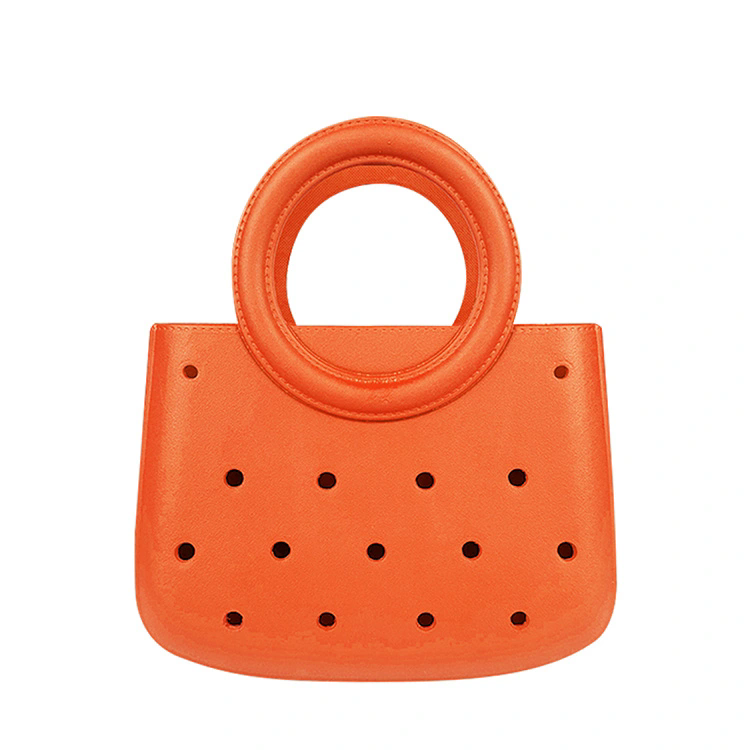
1. Why Does the Everyday Bag Market Keep Asking for Lighter Weight Without Giving Up Strength?
The everyday bag market is driven by two conflicting demands. The first is portability. A commuter carries a bag for two to three hours a day, and a heavy bag causes shoulder fatigue. The second is durability. The same bag must survive being dropped, crushed, and loaded with groceries. The traditional materials force a trade-off. PVC is heavy and becomes brittle as the plasticizer migrates. Nylon is light but wears through at the corners. Canvas is strong but absorbs water and becomes heavier when wet. The buyer wants a material that does not force the trade-off. In our factory, we produce EVA Bags for retail, promotional, and travel applications. Jinjiang Zhuoling New Materials Technology Co., Ltd. has been manufacturing EVA products for over 10 years.
The EVA bag does not solve the trade-off by magic. It solves it because the material has a low density and a high toughness at the same time, and because the foaming process can reduce the weight further without removing the structural skin that carries the load.
2. What Is EVA and Why Does Its Molecular Structure Deliver Both Low Density and Toughness?
EVA is a copolymer of ethylene and vinyl acetate. The vinyl acetate content determines the properties. A low VA content, around 5 to 10 percent, produces a material that behaves like low density polyethylene. A higher VA content, around 18 to 28 percent, produces a material that is soft, flexible, and tough. The VA groups disrupt the crystalline structure of the polyethylene and increase the free volume, which lowers the density and improves the impact resistance. The table below compares EVA with common bag materials.
| Material | Density (g/cm³) | Tensile strength (MPa) | Low temperature flexibility | Water absorption |
| EVA (18% VA) | 0.94 | 18 – 25 | Good to -40°C | < 0.1% |
| PVC (flexible) | 1.30 – 1.45 | 10 – 20 | Poor below -10°C | 0.2 – 0.5% |
| Nylon 6 | 1.13 | 70 – 80 | Good | 1.5 – 2.5% |
| Canvas (cotton) | 1.50 | 30 – 50 | Good | 7 – 8% |
The EVA density is about 30 percent lower than PVC and 40 percent lower than canvas. The tensile strength is lower than nylon, but the toughness, which is the energy absorbed before fracture, is higher because the material yields rather than cracks. In our factory, we specify the VA content for each bag application. A 18 percent VA grade is used for soft tote bags, and a 12 percent VA grade is used for semi-rigid cases. Jinjiang Zhuoling New Materials Technology Co., Ltd. provides the material certificate with the VA content for each batch.
3. How Does Foamed EVA Reduce Weight While Keeping Tear Resistance?
The foaming process introduces gas bubbles into the EVA matrix. The bubbles reduce the density, but they also reduce the strength if the foam is open-cell. A closed-cell foam keeps the gas bubbles separated by thin walls of EVA, and the walls carry the load. The foaming ratio, which is the ratio of the unfoamed density to the foamed density, determines the weight and the mechanical properties. A low foaming ratio, around 1.5 to 2.0, produces a dense sheet that is used for the bag body. A high foaming ratio, around 3.0 to 4.0, produces a lightweight sheet that is used for the shoulder strap and the bottom pad. The table below shows the relationship between foaming ratio and properties.
| Foaming ratio | Density (g/cm³) | Thickness range | Tear resistance | Typical application |
| 1.5 | 0.63 | 1.0 – 3.0 mm | High | Bag body, front panel |
| 2.0 | 0.47 | 1.5 – 4.0 mm | High | Bag body, gusset |
| 3.0 | 0.31 | 3.0 – 8.0 mm | Moderate | Shoulder strap, handle |
| 4.0 | 0.24 | 5.0 – 12.0 mm | Low to moderate | Bottom pad, lining |
Materials engineer's note: The closed-cell structure also provides water resistance. The bag does not absorb water, so it does not become heavier in the rain. The skin of the foamed sheet, which is the smooth surface formed against the mold, has a higher density than the core, and this skin carries most of the tear load. In our factory, we control the skin thickness by controlling the mold temperature and the cooling rate. Jinjiang Zhuoling New Materials Technology Co., Ltd. tests the tear resistance of every foamed sheet batch according to ASTM D624.
4. Why Do Sealing, Stitching, and Handle Attachment Decide the Real Service Life of an EVA Bag?
The material is only part of the durability story. The seams and the handle attachment are where most bags fail. EVA has a low surface energy, which makes it difficult to bond with adhesives and difficult to print on. The seams are usually formed by high frequency welding or by hot air welding. A poorly welded seam peels apart under load. The handle attachment is the highest stress point. If the handle is stitched directly to the bag body, the stitches create perforations that propagate into tears. A reinforced patch or a riveted attachment distributes the load over a larger area. In our factory, we use a reinforced patch and a bar-tack stitch at the handle root. We also test the handle pull strength at 300 N for 60 seconds. Jinjiang Zhuoling New Materials Technology Co., Ltd. provides the pull test report with each production lot.
We also recommend that the bag body seam be welded rather than stitched. A welded seam has no needle holes and no thread to wear out. The welded seam strength is typically 80 to 90 percent of the parent material strength, which is higher than the seam strength of a stitched bag.
5. How Should Buyers Specify and Verify EVA Bags for Daily Use Applications?
The specification should include six items. The first is the EVA grade and the VA content. The second is the foaming ratio and the sheet thickness for each part of the bag. The third is the seam method, welded or stitched. The fourth is the handle attachment method and the pull strength requirement. The fifth is the low temperature flexibility requirement. The sixth is the printing method and the adhesion requirement. The verification should include four tests. The first is the tensile and tear test on the sheet. The second is the seam peel test. The third is the handle pull test. The fourth is a low temperature drop test at -20°C. In our factory, we perform these tests on a sample basis for each production lot and provide the test report with the shipment. Jinjiang Zhuoling New Materials Technology Co., Ltd. also offers a pre-production sample for the buyer to evaluate.
We recommend that the buyer specify the VA content rather than just the word EVA. A bag made from 5 percent VA EVA will be stiffer and less durable than a bag made from 18 percent VA EVA. The difference is not visible on the shelf, but it is visible after three months of daily use.
Frequently Asked Questions About EVA Bags for Daily Use
Summary for Buyers and Product Developers
EVA Bags are lightweight yet highly durable because the EVA copolymer combines low density with high toughness, and because the closed-cell foaming process reduces weight while keeping the skin that carries the tear load. The durability also depends on the VA content, the foaming ratio, and the seam and handle construction. The specification should include the VA content, the foaming ratio, the sheet thickness, the seam method, and the handle pull strength. The verification should include tensile and tear tests, seam peel tests, handle pull tests, and low temperature drop tests. Jinjiang Zhuoling New Materials Technology Co., Ltd. has been manufacturing EVA products for over 10 years and provides full material and testing support for our customers.