

Why Do the Right Food Packaging Bags Matter More Than Most Brands Realize?
2026-03-25
When I talk with snack, coffee, and dry goods brands about packaging, the same frustration keeps coming up: their product may be excellent, but weak packaging quietly ruins freshness, shelf appeal, and buyer confidence. That is exactly where Nanyang Jinde Packaging Co., LTD naturally comes into the conversation. As I evaluate what makes packaging work in real retail and distribution settings, I keep coming back to one practical truth: well-designed Food Packaging Bags do much more than hold a product. They help protect flavor, support brand presentation, reduce damage during transport, and make everyday use easier for customers.
In my experience, buyers do not stay loyal to a product that arrives stale, leaks in storage, or looks generic next to competing brands. Packaging has to work hard on multiple levels at once. It needs to protect against moisture, oxygen, light, and rough handling, while also making the product easy to display, open, reseal, and trust. That is why choosing the right Food Packaging Bags is not a small purchasing decision. It is a product strategy decision.
Why Do So Many Food Brands Lose Sales Because of Packaging Problems?
I have seen many brands focus heavily on flavor development, sourcing, and pricing, then treat packaging as a last-minute item. That usually creates avoidable problems. Customers may never explain why they stopped buying, but the reasons often show up in the package itself.
- Products lose crunch, aroma, or texture too quickly after filling.
- Bags tear, wrinkle badly, or fail during shipping and shelf handling.
- Generic appearance makes the product blend into crowded retail displays.
- Resealing is inconvenient, which lowers repeat-use satisfaction.
- Window placement, bag size, or material choice does not match the actual product.
- Printing quality fails to communicate premium value.
For growing brands, these issues create more than complaints. They lead to returns, poor reviews, lost reorder momentum, and weak shelf conversion. That is why I see strong Food Packaging Bags as a frontline business asset rather than a simple packing material.
How Can Better Barrier Performance Protect Product Quality?
If a food product is sensitive to air, humidity, grease, or light, packaging structure matters immediately. I always tell brands that freshness is not preserved by luck. It is preserved by choosing material combinations that match the product’s behavior in storage and transit.
For example, nuts and dried fruit often need protection from moisture to maintain texture and taste. Coffee needs stronger aroma retention and oxygen control. Some products benefit from light-blocking layers, while others sell better with a clear window that lets buyers inspect the contents. Good packaging is never one-size-fits-all. The best Food Packaging Bags are built around the real needs of the product inside.
| Packaging Concern | What I Usually Look For | Why It Matters |
|---|---|---|
| Moisture exposure | Reliable moisture-resistant structure | Helps keep dry foods crisp and stable |
| Oxygen contact | High-barrier layered construction | Supports aroma retention and slows quality loss |
| Light sensitivity | Opaque or foil-based barrier options | Reduces flavor and color deterioration |
| Repeated opening | Zipper or resealable closure | Improves convenience and everyday usability |
| Retail display impact | Stand-up shape, matte finish, window options | Improves shelf presence and buyer attention |
When these details are aligned correctly, packaging starts doing what it should have done from the beginning: protecting the product while making the brand easier to trust.
What Makes Packaging Convenient Enough for Real Customers to Keep Buying?
I think this is one of the most underrated parts of packaging design. Buyers do not only judge a bag when they first see it. They judge it again when they open it, store it, pour from it, reseal it, and use it over several days or weeks. If that experience feels annoying, messy, or flimsy, the product itself can feel less premium than it really is.
This is where practical design choices make a measurable difference. I usually pay attention to features like stand-up formats, zipper closure, stable bottom structure, tear-notch usability, and the overall feel of the material in hand. The right Food Packaging Bags should make storage easier at home, not harder. They should help the customer feel that the brand has thought carefully about real-life use.
- Stand-up pouches help products display better on shelves and in kitchen cabinets.
- Resealable closures support freshness after first opening.
- Balanced bag sizing reduces wasted space and awkward product movement.
- Well-planned openings improve pouring and product access.
- Durable construction helps the package survive transport and repeated handling.
In other words, convenience is not a side feature. It is part of how a brand earns repeat orders.
How Can Custom Packaging Help a Brand Look More Premium Without Sounding Overdone?
Many product teams worry that “custom packaging” sounds expensive or purely decorative. I do not see it that way. Smart customization is often about improving fit, clarity, and differentiation. When I review packaging choices, I am looking for whether the bag shape, finish, color treatment, print layout, and visible product area match the brand’s market position.
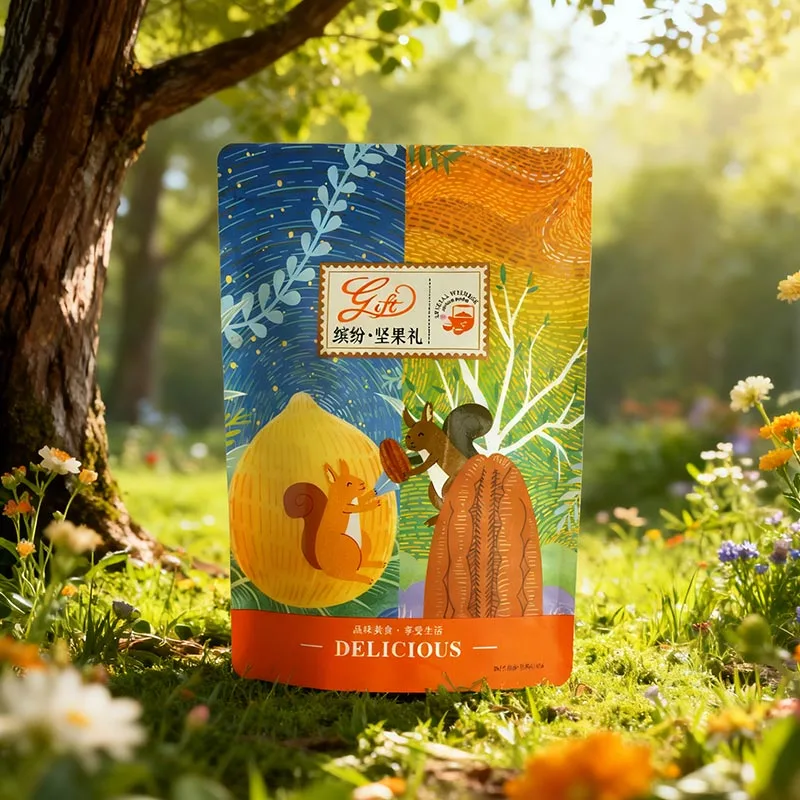
For example, a natural snack line may benefit from a clean kraft-style appearance. A premium coffee product may need stronger barrier structure and a more refined printed surface. A dried fruit or nut line may sell better with a transparent window that shows the actual product quality. Strong Food Packaging Bags do not all look the same because products, channels, and buyer expectations do not all work the same way.
| Brand Goal | Packaging Direction I Would Consider | Expected Benefit |
|---|---|---|
| Build premium shelf appeal | Matte finish, stronger print contrast, structured stand-up form | Better first impression in retail environments |
| Show product authenticity | Window design with balanced visibility | Helps buyers see actual food quality |
| Support repeat use | Resealable zipper construction | Improves customer convenience after purchase |
| Match eco-conscious positioning | Material and visual choices that align with brand tone | Creates stronger brand consistency |
| Reduce shipping damage | More durable layered structure | Helps protect the package through distribution |
When customization is done with discipline, it does not feel flashy. It feels correct.
Why Should Buyers Care About Manufacturing Consistency Before They Place an Order?
I have learned that a nice-looking sample is never enough. What matters is whether the production partner can keep quality stable across repeated runs. A bag that performs well once but varies in sealing, print registration, thickness, or finish on the next order can create real supply chain headaches.
That is why I look beyond appearance and ask harder questions. Can the supplier handle different structures for different food categories? Can they support private label customization with stable output? Can they produce packaging that balances appearance with practical protection? Reliable Food Packaging Bags should not depend on luck from batch to batch.
- Stable sealing quality helps reduce leakage risk.
- Consistent material control supports freshness performance.
- Accurate printing improves brand credibility on the shelf.
- Reliable conversion and bag-making help reduce fulfillment issues.
- Better production discipline supports long-term purchasing confidence.
For importers, distributors, and food brands, consistency is often what separates a stressful packaging relationship from a scalable one.
How Do I Decide Which Packaging Direction Fits Different Food Categories Best?
I never recommend choosing a bag style just because it is popular. I prefer to work backward from the product itself. The right answer depends on the food category, target market, storage conditions, shipping route, and brand positioning.
| Food Category | What I Prioritize First | What the Packaging Should Help Achieve |
|---|---|---|
| Nuts and seeds | Moisture protection and resealability | Maintain crunch and improve repeated use |
| Dried fruits | Barrier protection and display appeal | Preserve texture while showing product quality |
| Coffee | Aroma retention and oxygen control | Protect freshness and support premium presentation |
| Mixed snacks | Balanced durability and convenient format | Support shipping, display, and user handling |
This is exactly why thoughtful packaging development matters. One brand may need a strong light barrier. Another may need a visible window. Another may care most about resealable convenience and shelf presence. The best packaging choice is the one that solves the real problem instead of following a template.
What Should a Serious Buyer Ask Before Choosing a Packaging Supplier?
When I evaluate packaging partners, I try to stay practical. Instead of asking only about price, I focus on whether the supplier understands product protection, visual presentation, and long-term purchasing reliability.
- Can the supplier recommend structures based on the specific food category?
- Can the bag be customized in size, finish, closure, and printing style?
- Will the packaging support shelf appeal as well as product protection?
- Is the production quality consistent enough for repeat orders?
- Can the supplier help align packaging design with branding and user convenience?
These questions matter because lower packaging cost does not always mean lower total cost. If poor packaging damages freshness, weakens branding, or increases product loss, the real business cost becomes much higher later.
Why Is Now the Right Time to Upgrade Your Food Packaging Bags?
In crowded food markets, I do not think brands can afford packaging that only does the minimum. Customers expect better freshness, cleaner presentation, easier storage, and stronger trust signals from the moment they pick up a product. That is why upgrading Food Packaging Bags can directly support both product quality and brand growth.
If you are trying to improve the way your nuts, dried fruits, coffee, or other food products are protected and presented, this is a smart time to review your options carefully. If you want packaging that looks better, works harder, and fits your brand more accurately, contact us to discuss your project. I believe the right packaging can remove hidden pain points before they turn into lost sales, and the next strong step for your brand may start with a better bag and a better inquiry today.